Free Guide: Understanding LED vs UV Curing for High-Performance Gel Formulations
Jump to Section
- The Science of Curing: Photoinitiators Explained
- Traditional UV Lamps: The Original Industry Standard
- Modern LED Technology: Speed and Longevity
- Why Wavelength Compatibility is Non-Negotiable
- Avoiding Heat Spikes and Chemical Burns
- How to Choose the Right Lamp for Your Kit
- Frequently Asked Questions
In the world of professional nail artistry, the "dry" time isn't actually drying at all—it is a complex chemical reaction called polymerization. Whether you are a DIY enthusiast or an aspiring professional, understanding the nuances between LED and UV light technology is the difference between a manicure that lasts four weeks and one that peels off in four hours.
The Science of Curing: Photoinitiators Explained
Gel polish is composed of oligomers and monomers that remain in a liquid state until they are exposed to specific wavelengths of light. Inside every bottle of Candy Gel, there are molecules called photoinitiators. When these molecules absorb light at the correct frequency, they break apart and trigger a chain reaction that bonds the oligomers together into a hard, durable plastic.
If the light source doesn't match the photoinitiator's requirement, the gel will remain soft, or worse, "under-cured." Under-curing is a major cause of contact dermatitis because uncured chemicals can seep into the nail bed and surrounding skin. High-performance formulations require precise energy delivery to ensure every layer is fully polymerized.
Traditional UV Lamps: The Original Industry Standard
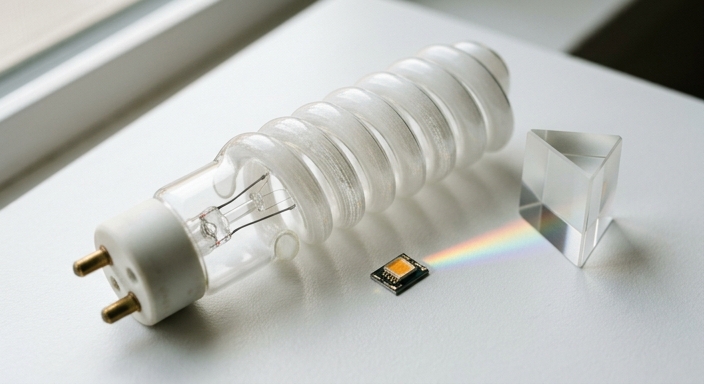
Traditional UV lamps use fluorescent bulbs that emit a wide spectrum of light (usually between 320nm and 400nm). Because they cover such a broad range, they can cure almost any gel polish on the market, regardless of the brand's specific photoinitiator.
However, traditional UV technology has several drawbacks:
- Slower Cure Times: Typically requires 2 to 3 minutes per layer.
- Bulb Decay: The intensity of UV bulbs drops over time. Even if the bulb is still glowing, it may not be emitting enough UV energy to cure the gel properly.
- Heat Generation: These lamps tend to get warm, which can be uncomfortable during longer sessions.
Modern LED Technology: Speed and Longevity
LED (Light Emitting Diode) lamps are the modern evolution of nail technology. They target a much narrower spectrum of light, usually around 365nm to 405nm, but with significantly higher intensity. This focused energy allows for rapid curing, often in as little as 30 to 60 seconds.
The primary benefits of LED lamps include:
- Durability: LED bulbs rarely need replacing and can last up to 50,000 hours.
- Efficiency: They use less power and cure gel up to three times faster than traditional UV.
- Safety: Because the exposure time is shorter, there is less overall UV exposure to the skin.
Why Wavelength Compatibility is Non-Negotiable
Not all LED lamps are created equal. Some high-performance gels, particularly those with heavy pigmentation (like deep blacks or vibrant neons), require specific wavelengths to penetrate the color and reach the bottom of the layer. If your lamp only emits 405nm but your gel requires 365nm for deep penetration, the top will look cured while the bottom remains gooey.
This is why we recommend "Dual Wave" or "UV/LED" lamps. these devices contain chips that emit both 365nm and 405nm light, ensuring compatibility with both old-school hard gels and modern LED-compatible soak-offs.
Avoiding Heat Spikes and Chemical Burns
A "heat spike" occurs when the polymerization process happens too quickly, creating an exothermic reaction. This is common with builder gels or thick layers of base coat. While it might feel like the lamp is "burning" your skin, it's actually the molecules in the gel moving so fast they generate friction heat.
To prevent this, look for lamps with a "Low Heat Mode." This feature gradually increases the light intensity over 99 seconds, slowing down the chemical reaction and keeping the temperature comfortable for the client.
How to Choose the Right Lamp for Your Kit
When selecting a lamp for a high-performance kit, check the wattage and the bulb placement. A 48W lamp is generally the "sweet spot" for professional results. Ensure the bulbs are placed along the sides and top of the interior to avoid "dead zones" where the thumb or pinky might not receive direct light.
Remember: Wattage is a measure of power consumption, not necessarily curing power. The quality and placement of the LEDs matter far more than a high wattage number on the box.
Frequently Asked Questions
Yes, usually. Because UV lamps have a broad spectrum, they will eventually cure LED gel, but it will take much longer (2-3 minutes) than an LED lamp (30-60 seconds).
This is the "inhibition layer." It's a thin layer of uncured gel that was exposed to oxygen. It's perfectly normal! You can either wipe it off with alcohol or apply the next layer directly on top.
While the risk is low due to short exposure times, many professionals recommend UV-protective gloves or sunscreen if you are a frequent user of traditional UV lamps.