I may earn a commission at no extra cost to you. #ad
Master the Soak-Off Removal Process Without Damaging Natural Nails
Jump to Section
The beauty of a gel manicure lies in its durability, but that same strength can become a nightmare during removal. Many enthusiasts and even some professionals make the mistake of "picking" or "peeling" gel polish when it starts to lift. This action rips away the top layers of the natural nail plate, leading to thinning, sensitivity, and peeling.
A "soak-off" is a chemical process where a solvent (acetone) enters the polymer network of the gel, causing it to swell and break its bond with the nail plate. When done correctly, the gel should slide off with minimal effort, leaving the natural nail underneath completely intact and healthy.
Essential Tools for Safe Removal
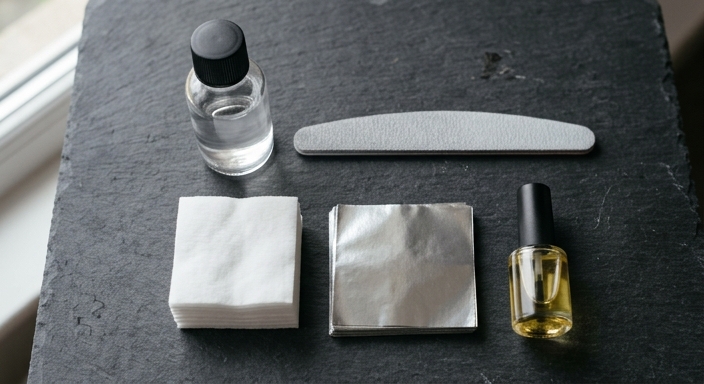
Before you begin, ensure you have the right kit. Using the wrong tools is the fastest way to cause mechanical damage. You will need:
- 100% Pure Acetone: Do not use "moisturizing" or "non-acetone" removers; they are not strong enough to break down gel.
- 180/240 Grit Nail File: For breaking the top coat seal.
- Cotton Balls or Lint-Free Pads: To hold the acetone against the nail.
- Aluminum Foil Strips or Silicone Soaking Caps: To prevent the acetone from evaporating.
- Orange Wood Stick or Plastic Pusher: Avoid sharp metal scrapers if possible.
- Cuticle Oil: Essential for protecting the surrounding skin.
Step 1: Breaking the Top Coat Seal
Gel polish is designed to be non-porous and resistant to chemicals—that is how it survives hand washing and daily chores. To allow the acetone to penetrate the color layers, you must first remove the shine of the top coat.
Take your 180-grit file and gently buff the surface of every nail. You aren't trying to file the color off completely; you simply want to "scuff" the surface until it looks matte and chalky. Pay special attention to the free edge of the nail, as this is where the gel is often capped and strongest.
Step 2: The Saturation Phase
Acetone evaporates incredibly fast. If you just dip your fingers in a bowl of acetone, the skin becomes severely dehydrated and the gel doesn't get enough concentrated exposure. The "wrap method" is the gold standard for a reason.
- Apply a thick layer of cuticle oil or petroleum jelly to the skin surrounding the nail. This creates a barrier against the drying effects of the acetone.
- Soak a small piece of cotton in 100% pure acetone.
- Place the cotton directly onto the nail plate.
- Wrap the fingertip tightly in aluminum foil. The foil traps the heat from your body, which actually speeds up the chemical reaction.
- Wait exactly 12–15 minutes. Resist the urge to peek!
Step 3: Removing the Residue Without Scraping
After the time is up, remove the foil wraps one by one. The gel should look "lifted" or "crumbled." If the gel still looks flat and firmly attached, re-wrap it for another 5 minutes. Never force it.
Using your orange wood stick, gently nudge the softened gel toward the free edge of the nail. It should flake away like wet bark. If you hit a stubborn patch, stop. Applying pressure with a tool to "scrape" the nail will gouge the keratin layers. Re-soak those specific spots instead.
Step 4: Post-Removal Nail Recovery
Once all the gel is removed, your nails will likely look white and dehydrated. This is normal but requires immediate attention. Wash your hands with warm water and a mild soap to remove any remaining acetone residue.
Apply a high-quality cuticle oil containing jojoba or almond oil. These oils have small molecular structures that can actually penetrate the nail plate to restore flexibility. For the best results, wait 24 hours before applying a new set of gels to allow the moisture levels in the nail to stabilize.
Common Removal Mistakes to Avoid
Even seasoned pros can fall into bad habits. Avoid these three common pitfalls to ensure your natural nails stay strong:
- The "Peel" Temptation: When a corner of gel lifts, it's tempting to pull it. Doing so can pull off up to 10 layers of your nail plate.
- Using Metal Tools Aggressively: Metal pushers are great for cuticles but dangerous for the nail surface during removal. If you must use metal, use a very light touch.
- Filing the Natural Nail: During Step 1, if you file too deep and hit the natural nail, you are thinning the foundation before the removal even starts.
Frequently Asked Questions
Why is my gel not coming off after 15 minutes?
This usually happens for two reasons: either the top coat wasn't filed enough to break the seal, or the gel you are using is a "Hard Gel" or "Builder Gel" that is not soak-off compatible. Hard gels must be filed off by a professional.
Can I use a steam removal machine?
Steam removal machines work by heating acetone. While they can be faster, they still require the same precautions. Ensure you are not over-heating your skin and always moisturize afterward.
Is acetone dangerous for my health?
Acetone is a strong solvent, but for occasional nail removal, it is considered safe. However, always work in a well-ventilated area to avoid inhaling the fumes, which can cause headaches or dizziness.